How to Analyze a Sales Funnel and Identify a Bottleneck
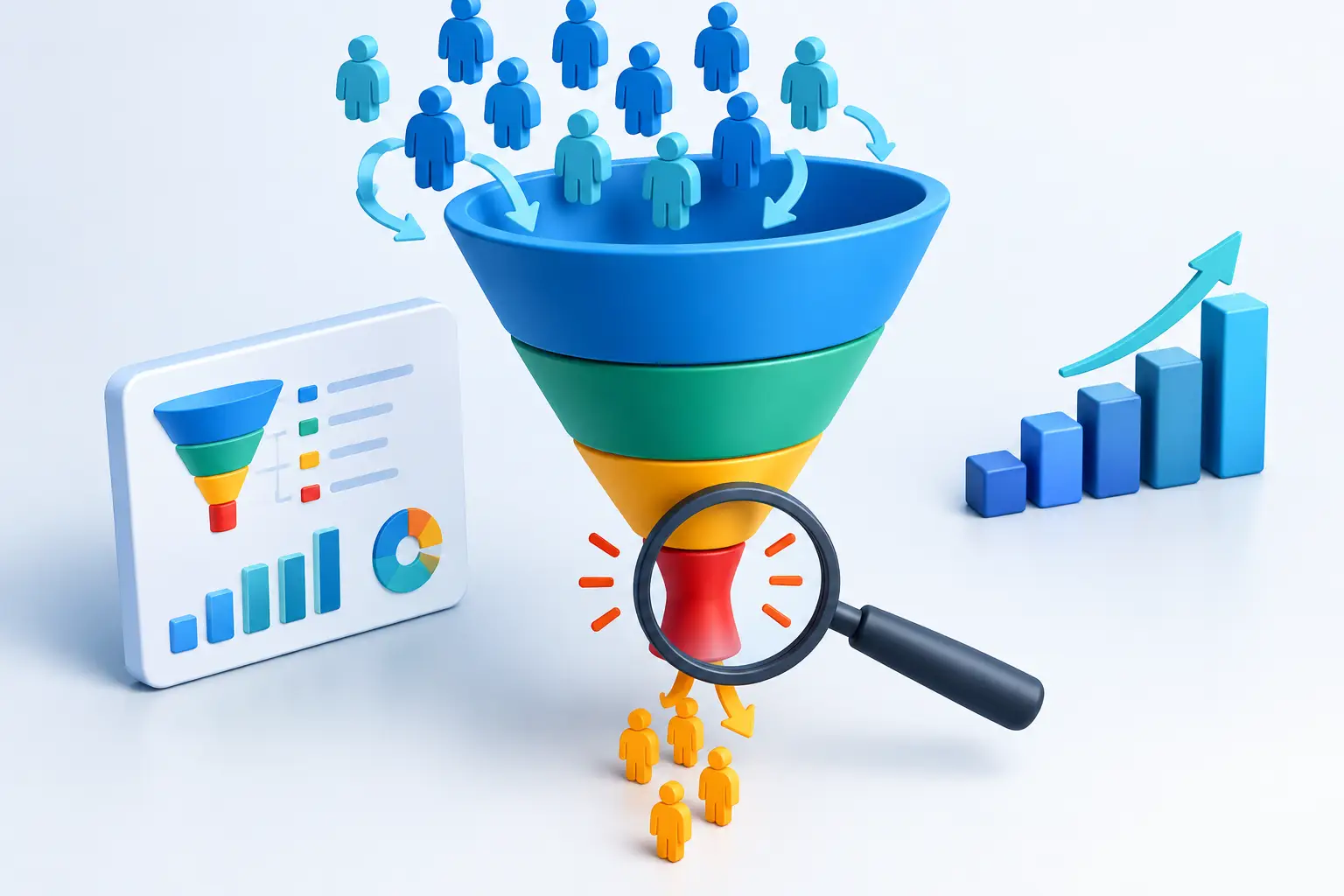
A business can receive dozens of leads a week and still feel that it has no reliable sales pipeline. The reason is usually not a shortage of inquiries, but an inability to see what happens to them from the moment they are submitted until the deal is signed. To understand how to analyze a sales funnel, you need to stop looking only at the number of leads and start tracking the movement, delays, and decisions at every stage.
A sales funnel is not a pretty diagram in a presentation. It is an operational system that connects marketing, the sales team, price quotes, follow-up, and revenue data. When that system is scattered across spreadsheets, email inboxes, messages, and personal calendars, it is hard to know whether the problem lies in lead quality, response time, the proposal, or the sales process itself.
What Is a Sales Funnel You Can Actually Analyze?
A useful funnel describes clear, measurable stages that the customer goes through. There is no single model that fits every business, but in service companies and B2B sales you can usually build a sequence that includes a new lead, a qualified lead, a scheduled meeting, a meeting that took place, a quote sent, negotiation, and a deal that was closed - or lost.
A common mistake is defining stages by gut feeling. For example, leaving a lead for weeks in an "in progress" status without knowing whether anyone spoke with them, whether a call was scheduled, or whether they are no longer relevant. Every stage needs a clear entry condition and exit condition. A qualified lead is one for whom need, budget, decision-making authority, and timing have been checked. A quote sent is a documented proposal, with an amount and a date, not a salesperson's promise to take care of it later.
The more precise the definitions, the more the data becomes a foundation for management rather than a vague task list. That said, precision does not mean creating twenty statuses. In a business with a short sales cycle, too many stages will slow the team down and hurt reporting quality. The goal is to represent real business decisions, not to document every small action.
How to Analyze a Sales Funnel Using Four Metrics
Good analysis starts with metrics that let you identify not only how much comes in, but what moves forward and what gets stuck. Four metrics provide a strong initial picture:
- Volume at each stage - how many opportunities are currently in each stage. A large number at a particular stage is not necessarily good news. If quotes are piling up without movement, the problem may be in follow-up or in how well the proposal fits.
- Conversion rate between stages - the percentage of opportunities that move from one stage to the next. For example, if 100 leads came in and only 25 became scheduled calls, the conversion rate is 25%. It is important to measure the ratio between each pair of stages, not just the final close rate.
- Time in stage - the average number of days a lead stays at each point. A drop in conversion is not always a messaging or pricing problem. Sometimes it is the result of a slow response, a long internal approval process, or a proposal sent too late.
- Expected monetary value - the sum of open opportunities, weighted by closing probability. This metric helps distinguish between a crowded funnel and a reliable revenue forecast. A 100,000 ILS proposal at an early stage is not worth the same, in forecasting terms, as a deal of the same amount that is right before signing.
When you look at the metrics together, a completely different picture emerges. Suppose the conversion rate from meeting to proposal is high, but the conversion rate from proposal to close is low. In that case, it makes no sense to immediately invest in another lead campaign. It is more reasonable to examine the structure of the proposals, the speed of follow-up, the way value is presented, the payment terms, and whether the person who received the proposal is actually the decision-maker.
Separate Source Data from Performance Data
Not every lead is born equal. That is why you should analyze the funnel by inquiry source as well: paid campaign, organic search, customer referral, event, business partnership, or outbound outreach. A source that brings fewer leads may yield more meetings, larger deals, or a faster sales cycle.
At the same time, it is worth examining performance by salesperson, service area, customer size, and region, but with caution. A small sample can be misleading. If a salesperson handled only three opportunities, a 100% close rate is still not a trend. Before making a decision, check a sufficient time period and the business context: are these complex deals, repeat customers, or expected seasonality?
Finding the Bottleneck: Questions Instead of Assumptions
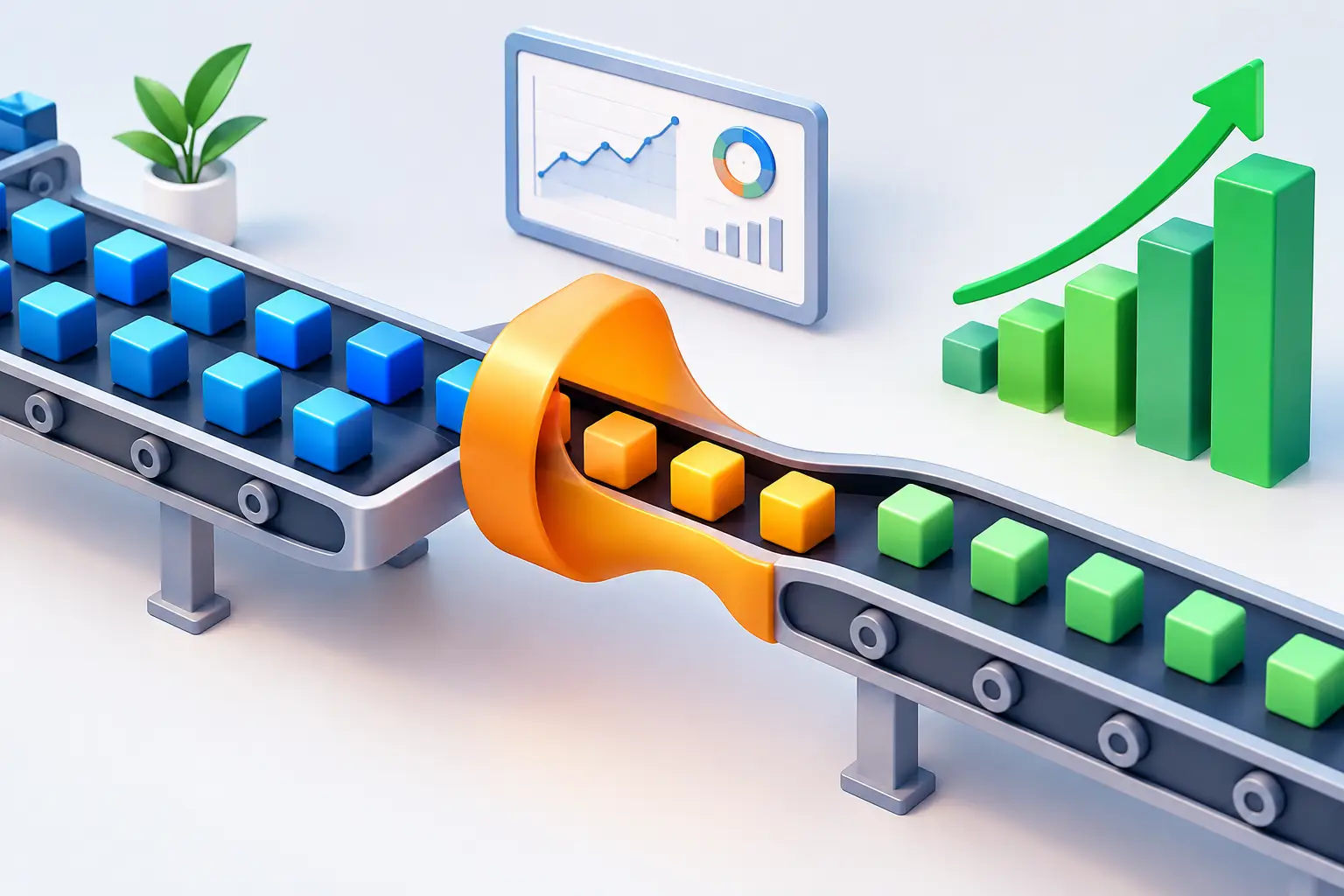
A bottleneck is the point where opportunities slow down, disappear, or lose value. It is not always the stage with the lowest conversion rate. The move from proposal to close may be naturally low in a business with complex sales, while a 36-hour response time to a new lead may be the real failure that affects the entire funnel.
To find the source, ask: How long does it take until first contact? How many leads actually receive a response? How many meetings are scheduled but do not take place? How many proposals are sent within a day or two of the meeting? How many lost deals are marked without a loss reason?
Loss reason is a management data point, not a technical field that can be skipped. It is advisable to define a small number of consistent reasons, such as budget, timing, poor fit, choosing a competitor, no response, or contract terms. When the team uses dozens of free-text phrasings, it is impossible to identify a pattern. When everything is marked as too expensive, that too is a sign that you should examine whether price is truly the problem or whether the value was not presented persuasively.
Examine Deals by Time Cohorts
Monthly analysis alone can hide a problem. A lead that comes in in January and closes in March affects two different months. That is why it is worth examining groups of leads by the month they entered, and tracking their progress over time. This makes it possible to compare, for example, whether leads that entered in the last quarter are progressing faster or slower than leads that entered in the previous quarter.
This approach is especially important when you are investing in a change to a campaign, a call script, or a quoting system. Without time cohorts, you may mistakenly attribute an improvement to new leads when the deals that closed came from older activity.
Turn the Analysis into a Management Routine
A sales funnel should not be reviewed only when revenue drops. It is recommended to hold a short weekly review of new opportunities, inactive leads, upcoming meetings, open proposals, and deals that have been in a given stage for an unusually long time. A monthly review should focus on trends: conversion rates, sales cycle time, average deal value, lead sources, and revenue forecast.
The important rule is that every exception should have an owner. If a lead did not receive a response on time, it should be clear who gets an alert and who handles it. If a quote has been open for seven days, the system should create a task or reminder according to the business's rules. Automation does not replace a professional conversation with a customer, but it prevents a situation where an opportunity disappears because no one remembered to follow up.
A good customer management system connects the inquiry form, lead source, tasks, meetings, proposals, and deal status. Such a connection allows the team to work from unified data rather than chasing information across different tools. At AIA, this is exactly the starting point for building processes: collect data in one place, define responsibility, and give managers a snapshot they can act on.
Improve One Point at a Time
After identifying a problem, the temptation is to change everything: campaigns, sales scripts, system, pricing, and proposals. This is a quick way to lose the ability to know what worked. It is better to choose one improvement point with a measurable impact. If lead response time is high, set up automatic routing and an alert. If many meetings do not take place, check reminders, attendance confirmation, and screening quality. If proposals get stuck, build an organized follow-up sequence and set a decision date already during the call.
After the change, decide in advance what will count as success and over what period you will measure it. Not every improvement shows up immediately in closed deals, especially with a long sales cycle. Sometimes the right metric at the first stage is a reduction in time in stage, an increase in the meeting-scheduling rate, or a decrease in the number of inactive leads.
A healthy sales funnel is not one in which every lead closes. It is one in which every opportunity is documented, handled on time, and moves forward according to a clear process. When you have control over this movement, you can make decisions based on facts, protect the team's time, and invest in growth instead of guesswork.