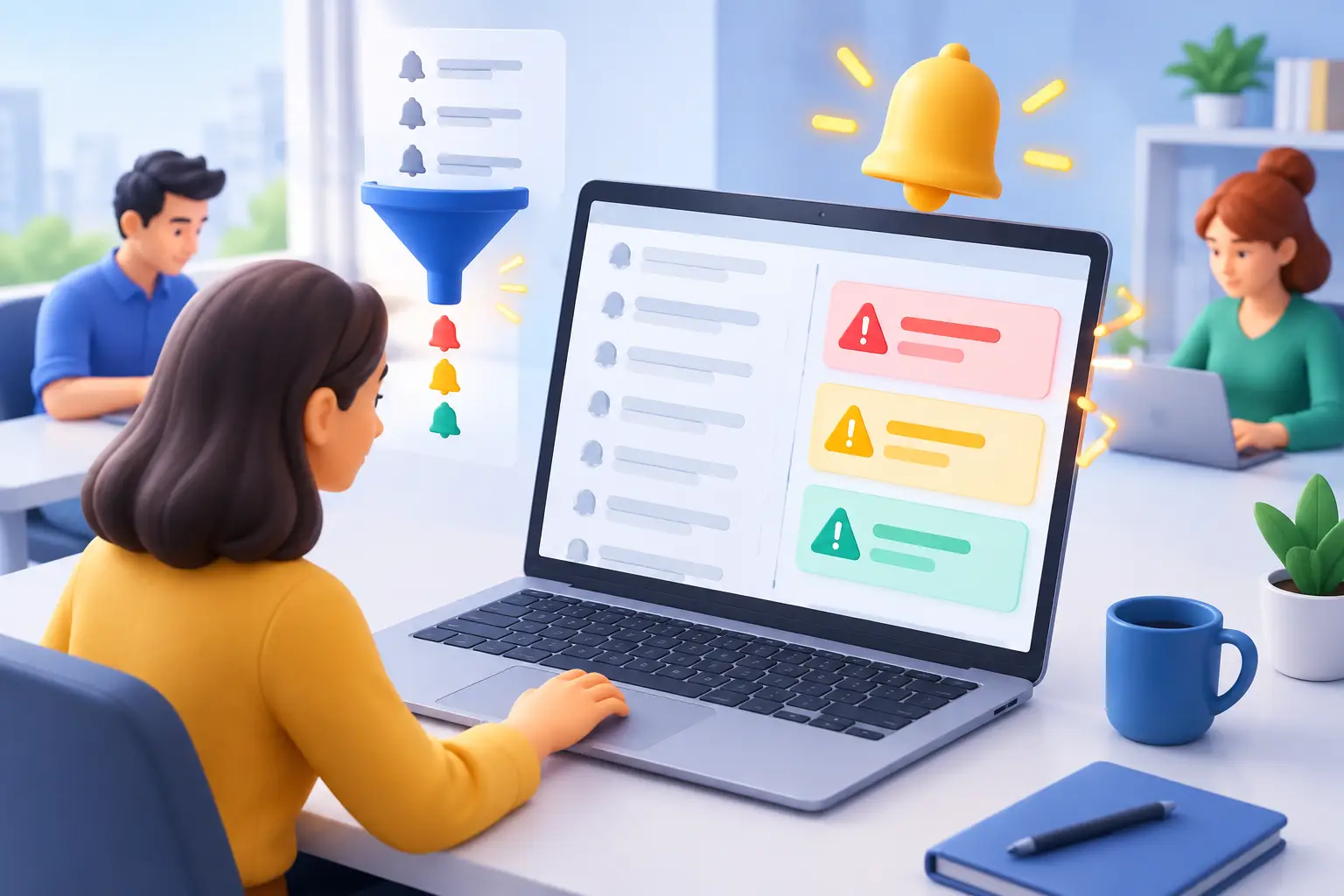
How to Track Customer Inquiries Without Missing Any

Some businesses don't lack work - they lack control. A customer leaves a WhatsApp message, a lead comes in through a website form, an email is waiting for a reply, a salesperson promises to get back, and no one really knows the status. When people ask how to track customer inquiries, the real question is how to build a system that doesn't depend on memory, improvisation, or how busy the day happens to be.
The problem usually starts not with the number of inquiries but with how scattered they are. Once inquiries arrive from multiple channels with no unified process, gaps begin to appear: duplicate responses, leads that never got an answer, customers who come back again because they weren't updated, and a team that works hard but has no clear picture of where things stand. The result is lost revenue, damage to the customer experience, and real difficulty managing performance.
How to Track Customer Inquiries in a Way That Actually Works
Effective tracking doesn't start with a tool. It starts with a clear definition of what counts as an inquiry, who is responsible for it, and what stages it goes through from the moment it comes in until it's closed. Without such a definition, even an advanced system will fill up with partial information and won't provide real control.
In practice, every inquiry needs to land in one place, with one clear status and defined owners. It sounds basic, but many businesses still manage inquiries through a mix of email inboxes, WhatsApp groups, Excel sheets, and personal memory. That's not a management infrastructure - it's a constant exposure to missed opportunities.
The right approach is to build a unified workflow. Every inquiry comes in, is tagged by source, and is assigned an owner, a target response time, and a current status. From there you can start managing for real, instead of just reacting to whatever pops up in front of you.
Step One: Consolidate All Inquiries Into One System
If inquiries keep flowing into five different places, you're not really tracking anything. You're chasing. That's why the first step is consolidation. You don't necessarily need to eliminate every existing channel, but you do need to make sure every channel feeds data into the same management system.
That system can be a CRM, a work management system, or an automation process connected to several tools. The decision depends on the scale of your operation, your team structure, and the complexity of your sales. A small business with a moderate volume of inquiries can start with a relatively simple system, as long as it enforces order. A business with multiple reps, several lead sources, and a long sales cycle will need a more precise infrastructure, with permissions, reports, and alerts.
The principle is the same: no more inquiries that go unrecorded. An inquiry that didn't make it into the system might as well not exist.
Defining Statuses That Drive Decisions
One common mistake is using statuses that are too general. When everything is marked "in progress," it's impossible to understand what's really happening. A good status should reflect an operational stage that leads to the next action.
For example, instead of settling for "open" and "closed," it's better to define stages such as: new inquiry, awaiting contact, contacted, awaiting documents, proposal sent, awaiting approval, closed, or not relevant. Not every business needs the same stages, but every business needs a clear operational language.
The advantage is bigger than it seems. Once statuses are accurate, you can see bottlenecks, measure response times, and understand where inquiries get stuck. Suddenly management goes from vague to measurable.
How to Track Customer Inquiries Without Overloading Your Team
Many managers' fear is justified: if the process is too cumbersome, the team simply won't update it. That's why a good tracking system shouldn't add unnecessary work. It should reduce manual work.
This is where automation comes in. You can capture inquiries automatically from forms, emails, or campaigns, assign them to a rep based on fixed rules, send an acknowledgment of receipt, create a follow-up task, and alert someone if the target time passes without a response. Instead of a manager chasing every inquiry, the system creates ongoing oversight.
That said, automation doesn't solve everything. If the workflow itself isn't clear, automation will only speed up the mess. That's why you should always start by designing the process, and only then connect triggers, alerts, and rules.
What Should Appear on Every Inquiry Card
For tracking to be useful, every inquiry should include the data that enables fast handling and decision-making. The customer's name and contact details are just the beginning. It's also important to record the inquiry source, the inquiry topic, the date it came in, the handling contact, the status, the next action date, and a brief record of what has already been done.
There's no need to turn every interaction into a complex document. Quite the opposite. Good documentation is short, consistent, and readable. If you have to dig for five minutes in every card to understand what's going on, the system isn't serving the team. It's slowing it down.
It's also worth distinguishing between a service inquiry, a sales inquiry, and operational support. These are different flows, with different SLAs, different owners, and different success metrics. Mixing them creates a misleading picture.
The Metrics That Actually Help You Manage Inquiries
A business doesn't need another impressive report. It needs metrics that help improve action. When looking at how to track customer inquiries at the management level, there are several data points that recur in almost every organization: first response time, average time to close, percentage of inquiries not handled on time, inquiry load per rep, and conversion rates from inquiry to opportunity or deal.
These metrics are practical because they point to systemic behavior. If response time is long, you need to check allocation, workloads, or operating hours. If many inquiries stay in "waiting," there may be no defined follow-up action. If a certain inquiry source generates high volume but low quality, that's already a marketing decision and not just an operational one.
What you shouldn't do is measure everything from day one. Too many metrics create noise. It's better to choose three to five key metrics, track them consistently, and only then go deeper.
When Excel Is No Longer Enough
Some businesses manage inquiries in Excel and it works for them for a while. If there are few inquiries, one person handling them, and a simple process, a well-organized spreadsheet can be enough. The problem begins when there are multiple users, multiple channels, or a need for real-time alerts and reports.
Excel isn't built for managing dynamic ownership, automatic assignment, call logging, or oversight of handling times. It gives you a list, not a work system. So if you feel you're "updating just to stay updated" and not really managing a process, that's usually the sign to move to a more structured system.
Here too, there's no one-size-fits-all solution. Sometimes a basic CRM will be enough. In other cases you need a system that connects marketing, sales, service, and operations. The right choice is the one that fits the structure of your business, not the one with the most features.
Common Mistakes in Tracking Customer Inquiries
The first mistake is thinking that responding quickly is enough. Speed matters, but without documentation, oversight, and follow-up, a fast response isn't worth much. A customer who got an answer within ten minutes but fell through the cracks the next day still experienced a failed process.
The second mistake is a lack of clear ownership. When several people "see" the same inquiry but no one is responsible for it, the chance of it being missed goes up. At every stage it should be clear who is handling it and what is required of them.
The third mistake is a system that doesn't reflect reality. If the team doesn't update it, if statuses are unclear, or if there are workarounds outside the system, reports become unreliable. Once trust in the system is broken, people go back to improvising.
The fourth mistake is focusing only on intake and neglecting closure. Many businesses check whether an inquiry came in, but less so whether it was closed, why it was closed, and how long it took. Without that, there is no real process improvement.
How to Implement a Proper Tracking Process in Your Organization
Good implementation starts with simplicity. Define which inquiries enter the system, who handles each type of inquiry, what the statuses are, and what the expected response time is. Then build a clear work screen for the team and a lean management dashboard for managers.
Next, test the process for two weeks to a month. Not to look for perfection, but to identify where there is friction. Maybe the statuses are too detailed. Maybe automation is missing in inquiry assignment. Maybe alerts are being sent at the wrong frequency. Improvement happens through adjustments, not through a thick procedures document.
When implementation is done right, the benefit is felt quickly. Fewer inquiries disappear, less time is wasted on internal clarifications, it's easier to see who is overloaded, and it's easier to connect marketing sources to actual results. This is exactly where an organized infrastructure turns from day-to-day management into a growth engine. It's also why businesses that work with an implementation partner like AIA look not just for a tool, but for a connected process that delivers control, measurement, and continuity.
If you're asking how to track customer inquiries, the short answer is not "with which tool," but "with which process." The tool only implements the method. Once you have a single source of truth, clear ownership, useful statuses, and consistent oversight, inquiries stop being a burden and become a process you can manage. From there, service looks different and sales run on a much more stable foundation.
In the end, good tracking isn't an administrative matter. It's the way to know what's coming into the business, what's moving forward, and what's still waiting for attention before it becomes a lost opportunity.